
Acne
What is acne?
Symptoms of acne
Causes of acne
Remedies for acne
References
What is acne?
Acne (acne vulgaris, cystic acne) is a common inflammatory skin condition characterised by outbreaks of pimples, blackheads, whiteheads and cysts. It affects the areas of skin with the densest population of oil glands (sebaceous follicles) - the face, the upper part of the chest, and the back. It is common in teenagers and normally tends to clear up after puberty, though the pimples can leave scars.
In the USA acne affects over half of all people in adolescence and early adulthood; in Australia around two thirds of all young people are affected. Acne tends to run in families, and for most people it tends to disappear or decrease substantially between the ages of 20-25. A few people have acne in their 30's, 40's and even older. The main effects of acne are psychological, as it usually appears during adolescence when people already tend to be most socially insecure.
Acne can occur in inflammatory and non-inflammatory forms.
In older people acne is uncommon, and is sometimes confused with rosacea.
Symptoms of acne
- Pimples (pustules).
- Seborrhoea (areas of scaly red skin).
- Blackheads, whiteheads (comedones), pinheads (papules), nodules.
- Scarring (in more severe cases).
Causes of acne
- Acne is most common at puberty because the surge of hormones at this time stimulates the sebaceous (oil-producing glands) in the skin and makes them prone to blockages and infection. In adolescence, acne is usually caused by an increase in testosterone that occurs in both males and females at this time. The testosterone is associated with an enlargement of the sebaceous glands and an increase in sebum (waxy oil) production.
- Several hormones have been linked to acne, including those that change around puberty and menstrual cycles. Taking pharmaceutical anabolic steroids (which mimic testosterone) can also cause acne. High levels of insulin are associated with acne.
- Milk. Dairy products can cause acne. (3, 5, 9, 10) Dairy products promote a hormone called insulin-like growth factor (IGF-1), and may also promote the production of some types of estrogens. IGF-1 levels peak in the teenage years, and may be abnormally high if you consume a lot of dairy products.
- Pimples are a visual symptom of a high level of mTOR. mTOR is promoted by high animal protein consumption, including the dairy products mentioned above. High mTOR is an early warning that a range of degenerative diseases could be developing. "...chance to attenuate patients increased mTORC1 signalling by reducing glycaemic load and milk consumption, which may not only improve acne but may delay the march to more serious mTORC1-driven diseases of civilisation" (10)
- Sugar. A high-sugar, high-starch diet is associated with acne. (3, 4) This causes a high level of insulin. If the acne sufferer snacks between meals, this causes raised insulin all day which strongly promotes acne.
- Vitamin D deficiency.
- Vitamin A deficiency.
- Estrogen dominance or being overweight. (10)
- Stress. Some research (1, 2) has shown that stress can trigger acne. The psychological effects of acne can also cause stress for some people, so it can be self-perpetuating.
- Bacterial infection. A healthy skin contains and needs many different bacteria. In the case of acne, some bacteria take advantage of blocked follicles / glands and multiply. Picking and squeezing pimples, and excessive scrubbing makes the situation worse by damaging the skin biome and promoting Propionibacterium acnes (Cutibacterium acnes) and Staphylococcus epidermidis, which are usually in excess in acne cases.
- Pyroluria.
- Cystic acne can occur when sweat collects in hair follicles and perspiration ducts. Hair / sweat follicles / glands can get blocked and infected, causing an inflammatory reaction. The cysts or boils can appear on the groin, buttocks, armpits, and other areas, with lesions penetrating deeper than with common acne.
- In adult women, polycystic ovary syndrome may cause acne.
- In menopausal women, acne can occur as production of the ovarian hormone estradiol decreases.
- Oily processed foods.
- Constipation.
- Oil-based cosmetics.
- Lack of fresh vegetables and fruit.
- Dehydration.
Minor causes / triggers:
Remedies for acne
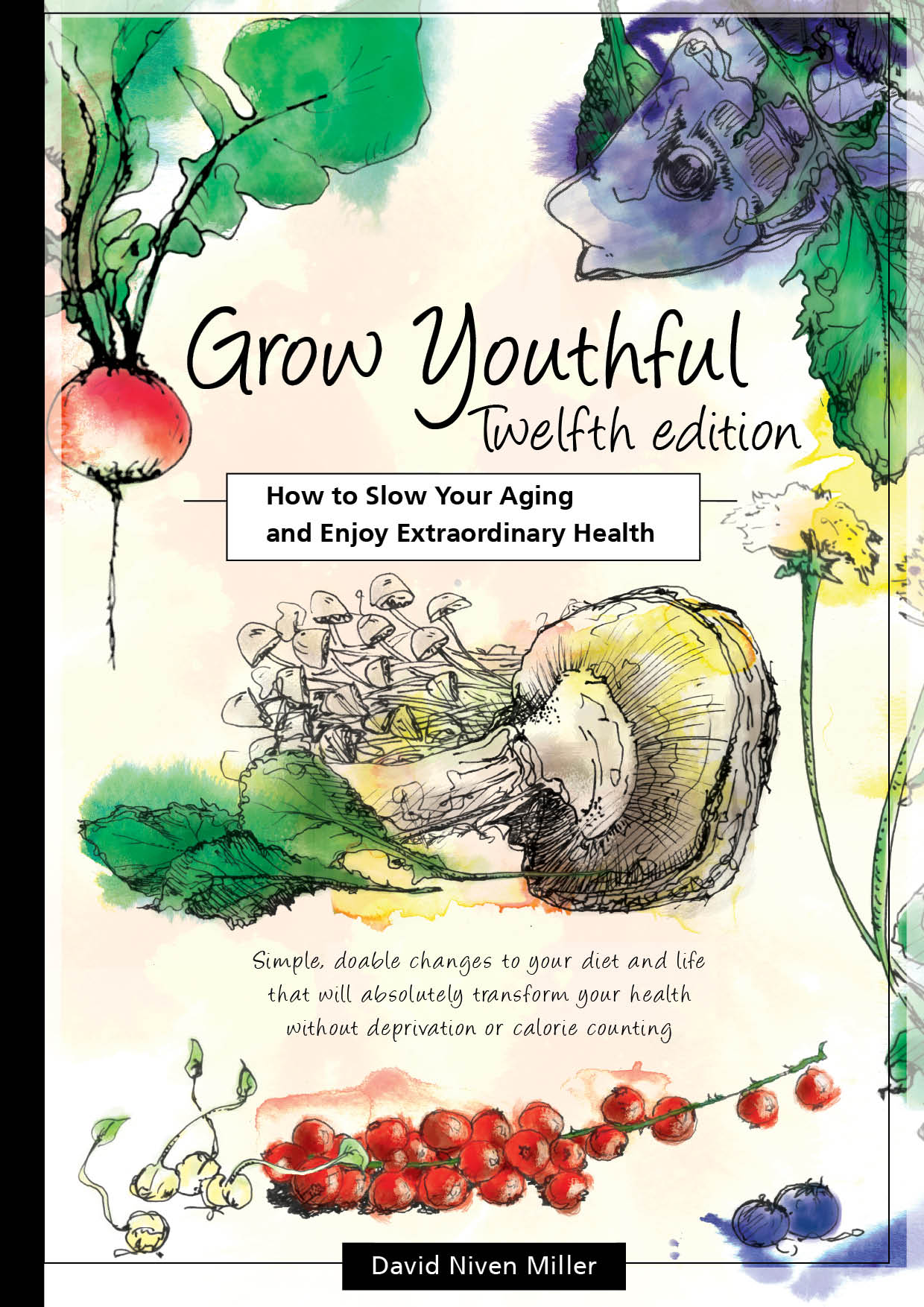
- A diet that has no sugar or refined starch. This type of diet is one of the central themes in Grow Youthful, and will not only help clear up acne, but also protect you from numerous other diseases.
- Do not snack between meals. Grow Youthful discusses fasting, ketogenic diets, reduced eating window and carbohydrate concentration. The less frequently you eat, the better will be your skin and your general health. Eventually, aim to have just two meals per day or ideally one meal per day.
- Reduce or eliminate dairy products, especially pasteurised milk.
- Vitamin D. Nearly all teenagers are deficient in vitamin D because they are not outside in the sun enough and it is almost impossible to get sufficient vitamin D from the diet.
- Do not touch the pimples or affected areas. It is easy to spread a bacterial infection. Be aware if you have the habit of touching your face absent-mindedly.
- Gently wash affected areas twice a day with lukewarm water and a mild soap. Keep your hair off your face.
- Skin probiotics. A new generation of probiotics is available, containing specially selected bacteria which you can spray on your skin.
- Apple cider vinegar. View visitors comments and experience for other home remedies.
- Antiseptics such as benzoyl peroxide may be used to clean the affected skin and reduce the bacteria. In more severe cases, antibiotics may be prescribed. Tea tree oil is a natural antibiotic and anti-inflammatory that has been used with some success, and is better than benzoyl peroxide and does not have the drying side-effect. (6, 7, 8)
- Iodine.
- Zinc.
- Hormones. For women, the hormones estrogen and progesterone may be used to treat acne. Some hormonal contraceptives also have a beneficial effect.
- Retinoids (vitamin A look-alikes). Some doctors prescribe drugs such as retinol, tretinoin (Retin-A), adapalene (Differin), and tazarotene (Tazorac), which tend to prevent follicle blockages when applied to the skin. However, they often tend to cause an initial flare-up of acne, facial flushing, and significant irritation of the skin. They should only be used for a strictly limited time, and with excessive or longer use have horrible and severe side-effects.
Oral retinoids include Roaccutane, Accutane, Amnesteem, Sotret, Claravis and Clarus. They tend to reduce sebaceous secretion. However, they have severe and horrible side-effects, and must only be used for a strictly limited time. Side-effects include liver damage, birth defects, nose bleeds, dry skin, hormonal disruption, chronic fatigue and several mental disorders including depression.
Throughout Grow Youthful I always emphasise that you are much better off if you can get your vitamins and other nutrients from high quality food, rather than from supplements or medications (especially pharmaceutical medications, which always have nasty side-effects). The best foods that are high in vitamin A include beef liver, oily fish, egg yolks, and to a lesser extent sweet potatoes, carrots, dark leafy greens, squash, butternut, red peppers and broccoli. - Herbs / plants. In addition to tea tree oil (above), some people have had success with aloe vera, neem, turmeric and papaya. (6)
References
1. National Institute of Arthritis and Musculoskeletal and Skin Diseases, January 2006.
2. Yosipovitch G, Tang M, Dawn AG, Chen M, Goh CL, Huak Y, Seng LF.
Study of psychological stress, sebum production and acne vulgaris in adolescents.
Acta Derm Venereol. 2007;87(2):135-9.
3. Ferdowsian HR, Levin S.
Does diet really affect acne?
Skin Therapy Lett. 2010 Mar;15(3):1-2, 5.
4. Smith RN, Mann NJ, Braue A, Makelainen H, Varigos GA.
The effect of a high-protein, low glycemic-load diet versus a conventional, high glycemic-load diet on biochemical parameters
associated with acne vulgaris: a randomized, investigator-masked, controlled trial.
J Am Acad Dermatol. 2007 Aug;57(2):247-56.
5. Melnik BC, Schmitz G.
Role of insulin, insulin-like growth factor-1, hyperglycaemic food and milk consumption in the pathogenesis of acne vulgaris.
Exp Dermatol. 2009 Oct;18(10):833-41.
6. Mantle D, Gok MA, Lennard TW.
Adverse and beneficial effects of plant extracts on skin and skin disorders.
Adverse Drug React Toxicol Rev. 2001 Jun;20(2):89-103.
7. Koh KJ, Pearce AL, Marshman G, Finlay-Jones JJ, Hart PH.
Tea tree oil reduces histamine-induced skin inflammation.
Br J Dermatol. 2002 Dec;147(6):1212-7.
8. Khalil Z, Pearce AL, Satkunanathan N, Storer E, Finlay-Jones JJ, Hart PH.
Regulation of wheal and flare by tea tree oil: complementary human and rodent studies.
J Invest Dermatol. 2004 Oct;123(4):683-90.
9. E Spencer, H R Ferdowsian, N D Barnard.
Diet and acne: a review of the evidence.
International Journal of Dermatology. April 2009, 48(4):339-47.
10. Melnik BC, John SM, Plewig G.
Acne: risk indicator for increased body mass index and insulin resistance.
Acta Derm Venereol. 2013 Nov;93(6):644-9. doi: 10.2340/00015555-1677. PMID: 23975508.